

















Why Connected ERP and Workforce Systems Matter More Than Ever
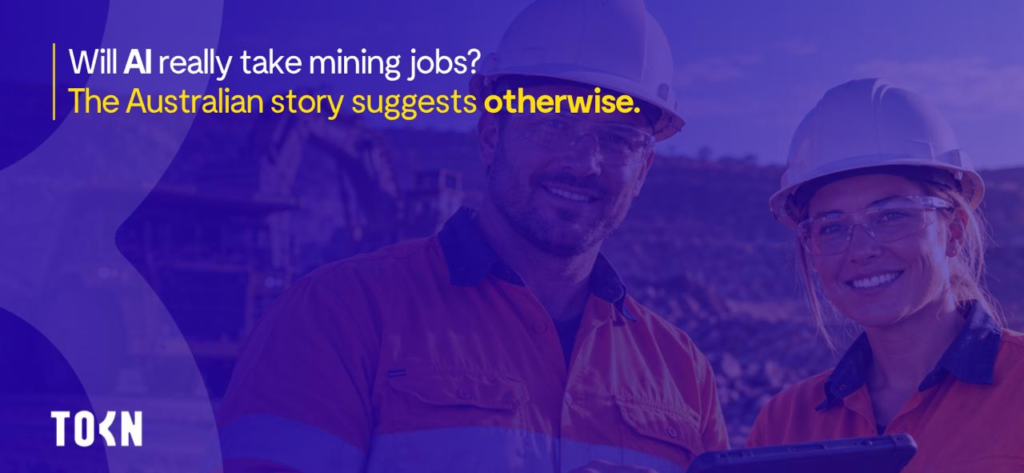
Artificial intelligence is changing Industrial operations globally. Autonomous trucks, remotely operated equipment and intelligent systems are reshaping how work gets done. But does that necessarily mean fewer jobs?
The emerging picture is more complex. Some repetitive tasks will decline and certain roles will change. At the same time, automation creates demand for new skills, safer ways of working and better operational decisions. For ERP and digital transformation professionals, there is another important question: are the business systems and workforce data behind these changes ready?
From site to the back-office
Rio Tinto’s Operations Centre in Perth demonstrates how technology can shift where mining work happens. Teams help manage parts of its Pilbara network from approximately 1,500 kilometres away. Autonomous equipment may operate without a driver in the cab, but people still monitor performance, coordinate operations, respond to exceptions and apply operational judgement.
The work has changed rather than simply vanished. The same principle applies to digital transformation more broadly: technology can automate activities while increasing the importance of people who understand the operation and can act on better information.
New skills create new opportunities
Fortescue’s introduction of autonomous haulage has also been accompanied by retraining and redeployment initiatives. Experienced employees bring knowledge of sites, equipment, safety and practical constraints that technology alone cannot replicate. Building digital capability on top of that experience creates valuable new career pathways.
The World Economic Forum’s Future of Jobs Report 2025 projects that structural labour-market change will affect 22% of today’s jobs globally by 2030, with 170 million jobs created and 92 million displaced, a net increase of 78 million. It also estimates that 39% of existing skill sets will be transformed or become outdated over the period. These are global projections across multiple drivers of change, not predictions specifically about AI in Australian mining.
Making mining safer
Automation can also remove people from higher risk environments. Across Australia’s industrial operations , Companies like Thiess worked with WesTrac and Caterpillar on autonomous drilling technology that enabled one operator to remotely manage three drill rigs. Moving people away from active equipment can improve safety while creating new technical and supervisory responsibilities.
This is an important distinction: the goal should not simply be to remove labour from a process, but to reduce exposure to risk and enable employees to contribute where their skills matter most.
AI is only as useful as the business data behind it
Not every valuable AI application involves an autonomous machine. Mining services and construction businesses already generate information about project budgets, equipment, labour costs, employee availability, training, mobilisation, timesheets and safety. AI can help identify patterns and highlight exceptions, but it cannot reliably connect the dots when the underlying information is fragmented, late or inconsistent.
ERP platforms such as MYOB Acumatica, are central to financial, project, asset and operational processes. Yet the information required to make good decisions often originates outside the ERP, on a remote site, in a mobile workflow or in a separate workforce application.
Consider a mining services company preparing for a shutdown. Its ERP may contain project budgets, labour rates and commitments. But knowing whether appropriately qualified workers are available, rostered and ready to mobilise requires current operational workforce information. Connecting these sources can give managers a clearer picture of labour availability, expected costs and potential compliance gaps.
AI can then be applied to a more complete and trustworthy information base. The priority is not AI for its own sake: it is reliable data, connected processes and a clear business problem to solve.
Why this matters for Acumatica customers
As ERP vendors including Acumatica expand intelligent automation, analytics and AI-enabled assistance, the value of accurate, accessible operational information increases. For mining services, construction and engineering businesses, that includes the data generated by workforce scheduling, mobilisation, time capture and compliance activities.
Integration between these operational workflows and Acumatica can improve visibility across projects and workforce costs, support more consistent reporting and provide a stronger foundation for future AI-enabled decision support. Importantly, integration does not require organisations to replace their existing ERP investment.
Connecting the field to ERP: where TOKN fits in.
TOKN Technology provides an operational workforce management layer connecting frontline activities with established ERP and back-office systems. Digital rostering, personnel compliance, mobilisation, time and attendance, leave management and offline mobile workflows help industrial businesses capture operational information where work actually happens.
Through TOKN Connect, relevant workforce and operational information can be integrated with ERP platforms including Acumatica. Depending on the configured processes and available interfaces, approved time can feed payroll, project costing or billing workflows, while project and workforce information can support planning and reporting.
The value is practical: fewer disconnected processes, less rekeying, improved visibility between field and office, and a more reliable data foundation for analytics and emerging AI capabilities. TOKN extends existing technology rather than asking organisations to replace it.
AI needs infrastructure, and infrastructure needs people
The AI transition also relies on power, communications, computing and dependable digital infrastructure. Remote mining operations cannot assume these foundations are already in place. Engineers, technicians, electricians, construction teams and technology specialists will remain essential to building and maintaining them.
This broadens the employment discussion beyond the mine gate. AI-driven change may influence work across energy, engineering, construction, telecommunications and specialist services, even while reducing demand for some individual tasks.
Five practical steps to prepare business systems for AI
- Identify disconnected operational data. Map how workforce availability, project costs, timesheets, compliance and mobilisation information move between field teams and ERP.
- Improve data quality at the source. Replace duplicate spreadsheets and paper handoffs with consistent digital processes that capture information where work occurs.
- Extend the existing ERP. Use appropriate integrations and operational applications to complement Acumatica or other ERP platforms rather than duplicate their core functions.
- Start with a measurable business problem. Prioritise outcomes such as reduced payroll administration, better labour-cost visibility or earlier identification of mobilisation gaps.
- Bring people along. Involve operations, payroll, finance, IT and frontline teams in process design and training so the technology reflects real working conditions.
The future of mining is about connected people and technology
It is too early to claim that AI will increase the total number of jobs in Australian mining. Some tasks will disappear, others will evolve and new roles will emerge. The strongest outcomes will come from investing in people as well as technology.
For ERP and digital transformation professionals, the opportunity is to connect the systems organisations already use, improve the quality of operational information and make it easier for employees to act on that information. That is how the promise of AI becomes a practical business capability.
At TOKN Technology, we help industrial organisations connect their operational workforce with ERP and back-office systems, including Acumatica. Explore how connected workforce processes and ERP integration can support your digital transformation journey at www.tokntechnology.com.
The future of mining is not people versus technology. It is people working better with connected technology.